
Top 10 Best Adventure Activities in Africa
Africa is blessed with a wide variety of destinations and activities, but these are ten of our favourite. Your Africa travel specialist can provide you with a complete
Africa's appeal extends well beyond the classic game drive, Great migration experience or Big Five safari, and here we look at some of our favourites.
The continent offers a spectrum of adventure activities that place you inside the landscape: paddling rivers where hippos surface an arm's length away, boarding down dunes taller than high-rise blocks, tracking gorillas through montane forest.
Some require fitness and nerve, others just curiosity. All deliver a different angle on Africa's wild places.
This guide covers ten activities across southern, eastern and central Africa, rated for physical demand and adrenaline so you can match them to your comfort zone. Each entry names the park or region, describes what the activity involves, and explains who it suits.
Quick answer: The best adventure activities in Africa include canoeing the Zambezi in Zimbabwe's Mana Pools, hot-air ballooning over the Great Migration in Kenya's Masai Mara, sand-boarding Namibia's Namib dunes, mokoro canoe trips in Botswana's Okavango Delta, gorilla trekking in Rwanda's Volcanoes National Park, star-bed sleep-outs on the Makgadikgadi Salt Pans, scuba diving Mozambique and Zanzibar reefs, sea kayaking the Cape, walking safaris in Zambia's South Luangwa, and swimming Devil's Pool at Victoria Falls.
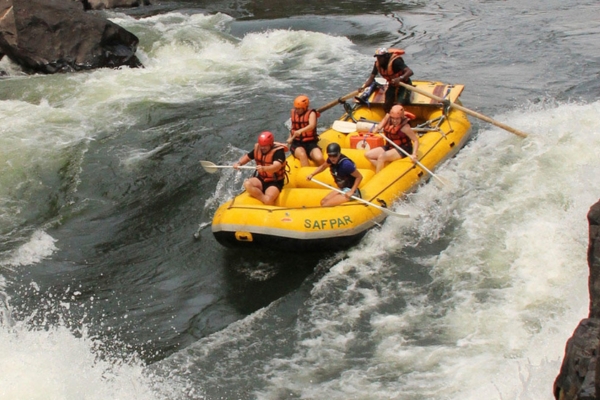
Canoeing the Zambezi in Mana Pools
Mana Pools National Park in Zimbabwe offers multi-day canoe safaris along the Zambezi River, typically covering 15 to 20 kilometres per day over two to four days.
The park protects 219,600 hectares of floodplain and woodland between the river and escarpment. Elephants, buffalo, waterbuck and impala feed along the banks.
Hippos and Nile crocodiles occupy the channels. You paddle in two-person Canadian canoes, with a qualified guide leading the flotilla.
The canoe places you at water level, so animal encounters feel immediate. Elephants cross the shallows a few boat-lengths ahead, hippos surface to exhale, and fish eagles call from leadwood branches overhead.
Camps are simple: dome tents pitched on sandbanks, meals cooked over fire, no fences. Nights bring lion roars and hyena calls across the water.
What fitness level does Zambezi canoeing require?
Moderate fitness suffices. You paddle for three to four hours in the morning, then again for two hours in late afternoon, with a long lunch break on an island. No prior canoeing experience is necessary, but you should be comfortable in open water and able to enter and exit a canoe from the riverbank.
When should you go?
May through October, the dry season. Water levels are lower and wildlife concentrates along the river. November through April sees higher water and limited canoe operations.
Great Migration Safairs
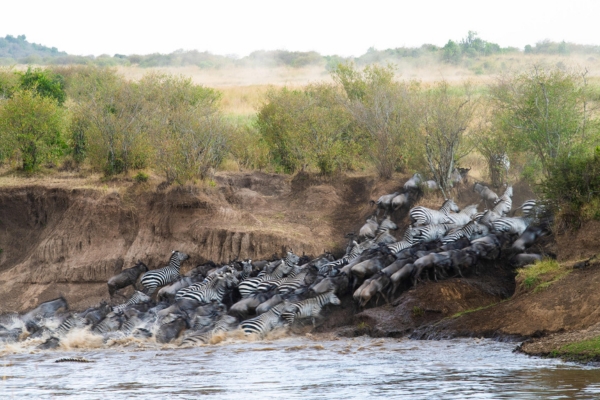
Witness more than 2 million animals as they go in search of greener grazing pastures on Africas endless viewing plains.
Hot-air ballooning over the Masai Mara during the Great Migration
Between July and October, roughly 1.5 million wildebeest and 300,000 zebras move through Kenya's Masai Mara, part of the annual Serengeti-Mara migration cycle. Hot-air balloon flights launch at dawn, when winds are calm, and drift for an hour to 90 minutes above the savannah. You take off from a site near your lodge, ascend to 300 metres or more, then descend to treetop level over herds and predator sightings.
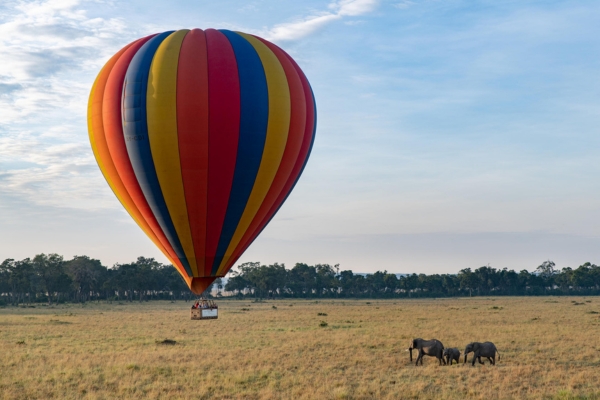
From the basket you see patterns invisible from the ground: the dark lines of wildebeest columns stretching across the plain, the dusty haze they raise, the spacing of individual animals. Lions often hunt in the early light. River crossings happen sporadically through the season; if you are lucky, your pilot positions the balloon above a crossing at the Mara River, where crocodiles wait in the current.
Is ballooning suitable for all ages?
Children over seven are generally accepted, but the basket has no seats and you stand for the full flight. Climbing in and out requires moderate mobility: you step onto a small ladder, then over the basket rim. The landing can be firm, though pilots aim for soft ground. Not recommended during pregnancy.
How much does a Mara balloon safari cost?
Expect to pay between USD 450 and USD 600 per person. The fee includes the flight, a champagne bush breakfast after landing, and a certificate. Bookings are made through your lodge or directly with the balloon operator at least a week in advance during peak season.
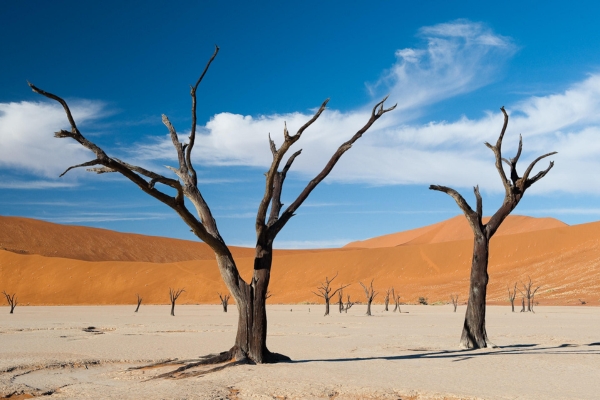
Sand-boarding the dunes of the Namib Desert
The Namib Desert runs for 2,000 kilometres along Namibia's Atlantic coast, its dune sea reaching up to 300 metres in height. The tallest dunes are found around Sossusvlei and near Swakopmund.
Sand-boarding involves descending these dunes on a laminated board, either lying prone or standing, reaching speeds between 40 and 80 km/h on steep faces.
The Namib's sand is fine and dry, which makes it both fast and forgiving when you fall.
Operators provide boards, wax and safety briefing. Prone boarding (lying on your stomach, head-first) is easier to control and suitable for beginners. Stand-up boarding resembles snowboarding and requires balance and prior board experience.
After each run, you climb back up the dune, which can take 15 to 30 minutes depending on height and sand softness.
Where is the best place to sand-board in Namibia?
Swakopmund, on the coast, has several operators offering guided dune trips into the Namib-Naukluft National Park. Sossusvlei is more remote; sand-boarding there is arranged privately or through high-end lodges. Swakopmund is the easier option logistically and offers taller, more varied dunes.
Do you need prior experience?
No. Prone boarding is intuitive and most people manage it within minutes. Stand-up boarding is harder and best attempted if you have snowboarding or skateboarding background. Fitness matters: climbing dunes in soft sand is strenuous, especially above 30 degrees Celsius.
Mokoro safaris in the Okavango Delta
A mokoro is a traditional dugout canoe, originally carved from the trunk of a jackalberry or sausage tree, now more commonly made from fibreglass to protect the trees.
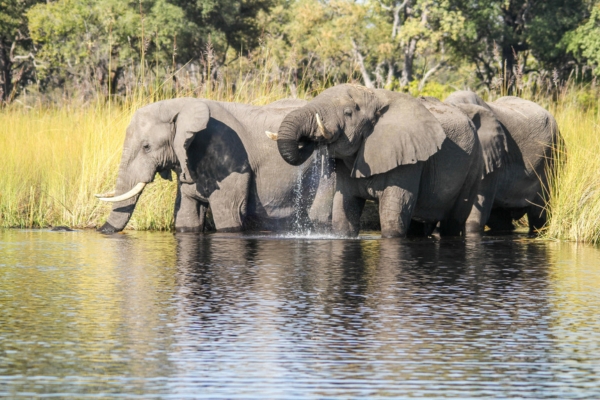
Mokoro trips are central to exploring the Okavango Delta's shallow channels, particularly in the permanent swamp areas where water is too shallow for motorboats.
Your poler stands at the stern and propels the mokoro with a long pole, while you sit low in the hull, sometimes just centimetres above the waterline.
The pace is slow and near-silent. Reed frogs call from lily pads, malachite kingfishers dart between papyrus stems, and lechwe antelope wade in the shallows ahead.
Elephants cross channels, crocodiles bask on sandbanks, and hippos grunt from deeper pools. Most mokoro trips last two to three hours and are combined with a walking safari on an island.
Multi-day mokoro expeditions, camping on islands each night, are available from specialist operators in the Okavango Panhandle and eastern Delta.
Is a mokoro safari safe with hippos and crocodiles around?
Yes, when guided by an experienced poler. They read animal behaviour and avoid territorial hippos and basking crocodiles. The mokoro's shallow draft and silent movement reduce disturbance. However, you must stay seated and follow instructions immediately. Children under six are sometimes excluded by lodges.
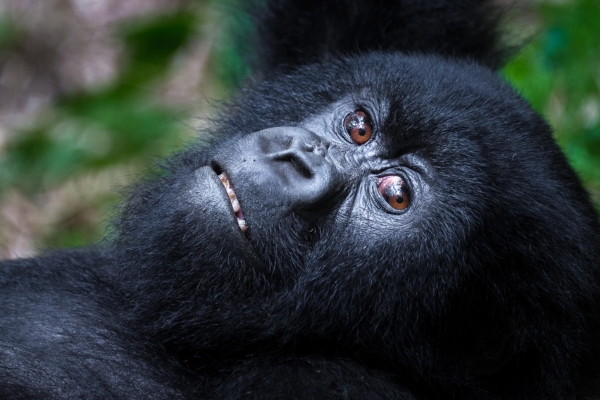
Gorilla trekking in Rwanda's Volcanoes National Park
Volcanoes National Park, in Rwanda's northwest, protects part of the Virunga Mountains, home to roughly 600 mountain gorillas. Ten habituated gorilla families are visited by trekkers, with a maximum of eight people per family per day.
Treks begin at 7am from the park headquarters in Kinigi, after a briefing and assignment to a group. The hike can take anywhere from 30 minutes to four hours each way, depending on where the gorillas slept the night before.
Altitude ranges from 2,400 to 4,000 metres. Vegetation is thick: bamboo forest, hagenia woodland, and tangled undergrowth.
When you reach the gorillas, you spend one hour with them. The dominant silverback may be feeding, grooming his family, or resting. Juveniles sometimes play nearby, and infants cling to their mothers. You stay at least seven metres away, but gorillas occasionally approach closer. Photography is allowed without flash.
How fit do you need to be for gorilla trekking?
Moderate to high fitness. Terrain is steep, muddy, and uneven, with altitude adding difficulty. Porters are available to carry daypacks and offer a steadying hand, which helps significantly. If you have reasonable fitness and can hike for three hours with breaks, you should manage. Those with mobility issues can request a shorter trek to a closer group, though this is not guaranteed.
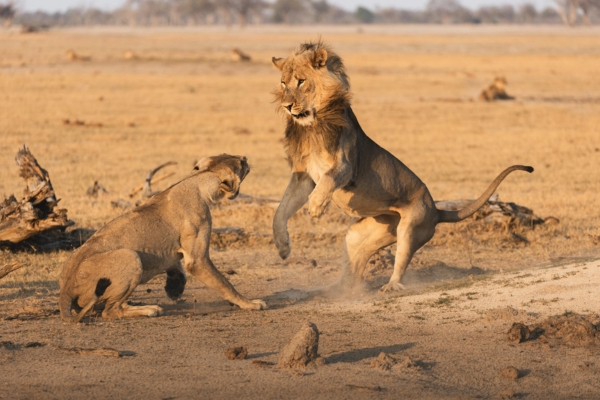
All-Inclusive Big 5 Safaris
Experience the brilliance of a privately guided Big 5 safari in the most wildlife-rich concessions in Africa.
What does a gorilla trekking permit cost?
Rwanda charges USD 1,500 per permit per person (as of 2024). Uganda's Bwindi Impenetrable National Park charges USD 800. The permit fee funds conservation and community projects. Permits must be booked months in advance, especially for June through September and December through February.
Star-bed sleep-outs on the Makgadikgadi Salt Pans
The Makgadikgadi Pans in Botswana cover 16,000 square kilometres, remnants of a vast lake that evaporated thousands of years ago. During the dry season (April to November), the surface is a white crust of salt, flat to the horizon in all directions. A handful of lodges on the pans' edge offer sleep-out experiences: a bedroll or mattress on a raised platform, no tent, open to the sky.
The Milky Way arches overhead with unusual clarity. Light pollution is zero. You hear the occasional bark of a brown hyena or the distant roar of a lion, but the dominant sound is silence. By day, the lodges arrange quad-biking across the pans, visits to habituated meerkat colonies, and drives to Kubu Island, a granite outcrop scattered with ancient baobabs.
Is sleeping out safe?
Yes. Platforms are elevated and away from animal pathways. Lodges provide a radio or mobile contact with camp, and a member of staff is usually stationed nearby. However, this activity is not suitable for those uncomfortable with the idea of wildlife nearby, even if the risk is minimal.
Scuba diving and snorkelling the Indian Ocean reefs
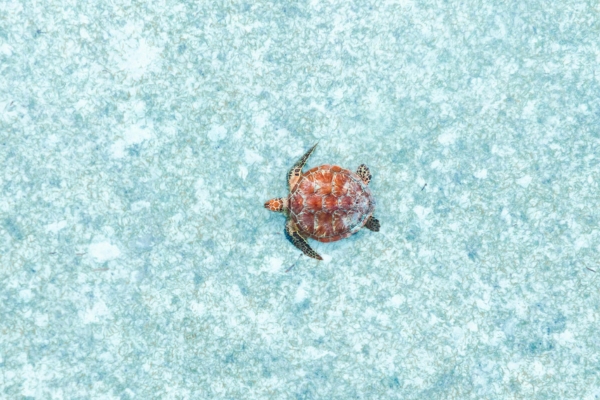
Mozambique's Bazaruto and Quirimbas archipelagos, along with Zanzibar's Mnemba Atoll and the Kenyan coast near Watamu, offer warm-water reef diving year-round. Water temperature ranges from 24 to 28 degrees Celsius. Visibility is typically 15 to 30 metres, peaking from October to March. Reefs host hawksbill and green turtles, manta rays, whale sharks (seasonal), moray eels, and hundreds of reef fish species including Napoleon wrasse, parrotfish and lionfish.
Most island lodges have dive centres offering PADI courses, guided dives for certified divers, and snorkelling trips. Dive sites range from shallow coral gardens at five metres to deeper walls and channels at 30 metres. Mozambique's Tofo Beach is known for manta rays and whale sharks, best from October through April.
Do I need to be PADI-certified to dive these reefs?
Not necessarily. Most centres offer Discover Scuba Diving introductory sessions in shallow water for non-certified divers, usually to a maximum depth of 12 metres. If you want to explore deeper sites or dive independently, you will need Open Water certification or higher.
Sea kayaking and sailing along the Cape coast
South Africa's Western Cape coastline offers sea kayaking around the Cape Peninsula, particularly from Simon's Town, where African penguins nest, and off the boulder-strewn coast of Hermanus. Guided kayak trips typically last two to three hours. You paddle in tandem sit-on-top kayaks through kelp forests, past seal colonies, and alongside rocky islands. Cape fur seals are curious and sometimes surface beside the kayak.
Sailing trips, both half-day and multi-day, depart from Cape Town's V&A Waterfront and sail around Table Bay or down the coast towards False Bay. Between June and November, southern right whales calve in the bays around Hermanus, and it is possible to sail close enough to hear their breathing.
Is sea kayaking suitable for beginners?
Yes. Kayaks are stable, and guides stay close. However, ocean conditions vary: calm mornings are best, while afternoons can bring wind and chop. If you are prone to seasickness, take a preventative before departure. Children over 10 are generally accepted if they can swim.
Walking safaris in South Luangwa and elsewhere
Zambia pioneered the walking safari in the 1950s, and South Luangwa National Park remains the continent's leading destination for this activity.
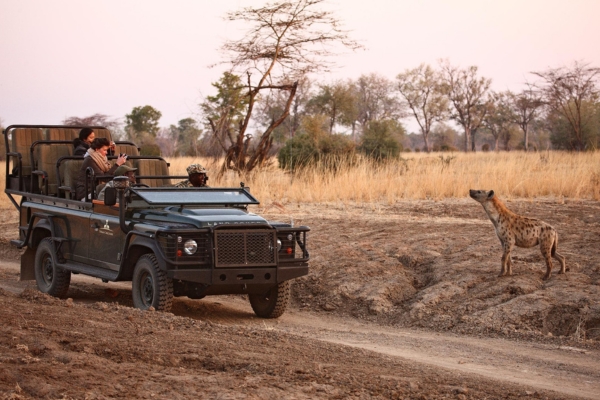
Walking safaris last from two hours to multi-day expeditions, with nights spent in seasonal bush camps accessible only on foot. You walk in single file, guided by an armed professional guide and a tracker, typically covering five to eight kilometres per morning.
On foot, your senses sharpen. You notice dung beetles rolling balls across the path, the scent of wild sage crushed underfoot, the alarm call of a grey lourie signalling a predator. Buffalo, elephant and lion encounters are managed carefully: the guide reads body language and keeps distance. Walking is also the best way to learn tracking: interpreting spoor, reading broken twigs, identifying scat.
Which other parks offer good walking safaris?
Zimbabwe's Mana Pools and Hwange, Tanzania's Selous (now Nyerere National Park), Kenya's Laikipia Plateau, Botswana's Okavango and Moremi, and South Africa's Kruger, particularly in private concessions like Timbavati and Sabi Sand. The quality depends on the guide's experience and the park's regulations; some parks restrict walking or require guests to stay near a vehicle.
Seychelles Island Escape
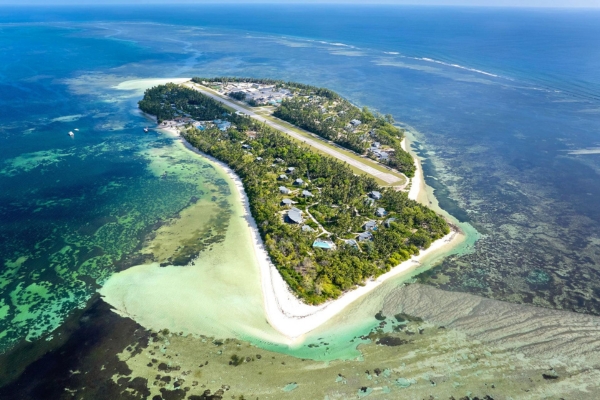
The perfect destination to end a luxury safari experience with warm azure waters and white sandy beaches.
Swimming Devil's Pool at Victoria Falls
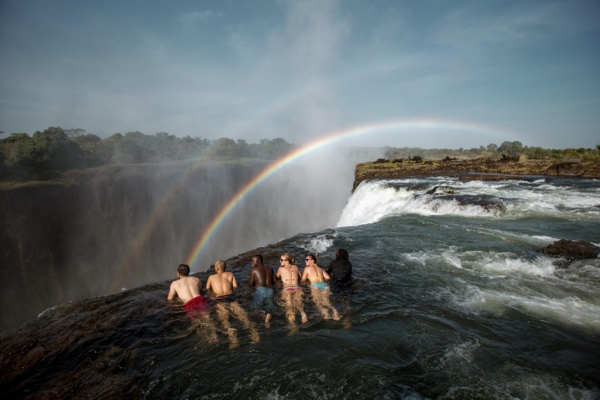
Devil's Pool sits on the Zambian side of Victoria Falls, on the edge of the main cascade where the Zambezi River drops 108 metres.
Between roughly August and January, when water levels drop, guides lead small groups (usually six people) to the pool via Livingstone Island. You wade through channels, swim a short stretch, and settle into a natural rock hollow at the very lip of the falls.
The current is strong enough that you lie flat and hold onto the rock, but controlled enough that you can peer over the edge while water thunders around you.
The swim out and back takes about 20 minutes. The entire experience, including the boat transfer from the Zambian bank and time on the island, lasts roughly two hours. Devil's Pool is not open during high water (February to July), when the current becomes dangerous.
Is Devil's Pool dangerous?
It carries inherent risk. The current is powerful, the rocks are slippery, and you are at the edge of a major waterfall. However, guides have extensive experience and brief participants thoroughly. You must be a confident swimmer. Those uncomfortable with strong currents should skip it. The activity is not suitable for children under 12 or pregnant women, and most operators require guests to sign an indemnity.
Frequently asked questions
Which African adventure activities are suitable for families with children?
Mokoro safaris in the Okavango suit children over six, as the pace is gentle and the experience immersive without high risk. Hot-air ballooning over the Masai Mara accepts children from age seven, though the hour-long standing flight can be tiring for younger ones. Star-bed sleep-outs appeal to older children (10 plus) who find the night sky and sounds exciting rather than unsettling. Walking safaris work for teenagers with reasonable fitness, while Devil's Pool and sand-boarding have higher age thresholds (12 and 14 respectively at most operators).
What is the best time of year for adventure activities in southern Africa?
May through October is the dry season across most of southern Africa and ideal for canoeing the Zambezi, sand-boarding in Namibia, walking safaris in Zambia, and mokoro trips in the Okavango. Water-based activities like Devil's Pool depend on river levels: August to January is the window. Scuba diving along the Indian Ocean coast is year-round, though October to March offers better visibility and calmer seas.
Do you need travel insurance that covers adventure activities?
Yes. Standard policies often exclude activities like white-water rafting, gorilla trekking (due to altitude and terrain), sand-boarding, and open-water swimming near wildlife. Check your policy wording and upgrade to an adventure or extreme sports rider if necessary. Medical evacuation from remote areas can exceed USD 50,000, so comprehensive cover is critical.
Can you combine multiple adventure activities in one trip?
Absolutely. A two-week itinerary could include canoeing in Mana Pools, walking safaris in South Luangwa, mokoro and sleep-outs in the Okavango, and Devil's Pool at Victoria Falls. Alternatively, a Tanzania and Rwanda route might combine hot-air ballooning over the Serengeti, a Ngorongoro Crater safari, and gorilla trekking in Volcanoes National Park. The key is managing distances (many parks are several hours apart by road or light aircraft) and allowing recovery time between strenuous activities.
How far in advance should you book adventure activities in Africa?
Gorilla trekking permits in Rwanda and Uganda should be secured four to six months ahead, especially for peak season. Hot-air balloon flights in the Mara and Serengeti fill up weeks in advance during migration months. Canoeing in Mana Pools, walking safaris, and mokoro trips can sometimes be arranged a few weeks out, but booking two to three months ahead ensures lodge availability and preferred dates. Last-minute bookings are possible in shoulder season (April, November) but risky during school holidays.